Healthy Crockpot Vegetable Curry
Highlighted under: Healthy Kitchen Moments
I absolutely love making this Healthy Crockpot Vegetable Curry, especially on busy weeknights when I want a wholesome meal without the fuss. The best part is how the flavors meld together while it simmers, filling my kitchen with an inviting aroma. I can throw in whatever vegetables I have on hand, and the result is consistently delicious. It’s a versatile recipe that allows for substitutions based on seasonal produce, ensuring a fresh meal every time. Let’s dive into this colorful and nutritious dish that’s perfectly satisfying for the whole family!
When I first made this Healthy Crockpot Vegetable Curry, I was skeptical about just tossing everything into the pot. But as I learned, slow cooking truly brings out the individual flavors of each vegetable, resulting in a rich and hearty dish. The combination of spices creates warmth and depth that just can't be rushed in a stove-top recipe.
One little tip I picked up along the way is to add fresh herbs right at the end, just before serving. This elevates the dish and gives a punch of freshness that complements the vegetables perfectly. I can’t wait for you to try this recipe!
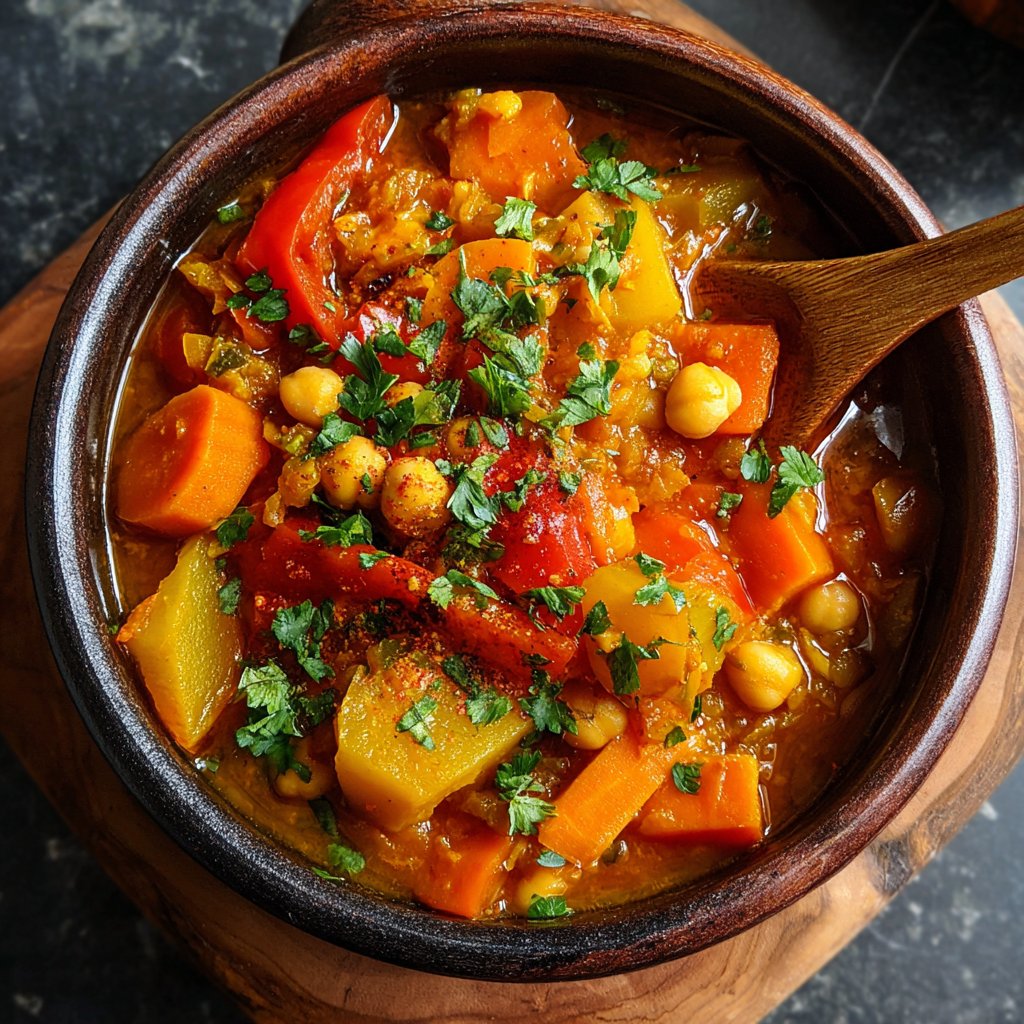
Why You Will Love This Recipe
- Colorful medley of fresh vegetables packed with nutrients
- The savory spices create a warming, comforting experience
- Set it and forget it - perfect for busy schedules
Understanding Ingredients
The vegetables selected for this curry not only contribute to the vibrant colors but also bring their own unique flavors and nutrients to the dish. For instance, carrots provide natural sweetness, while bell peppers add a slight tang. If you’re missing some of the vegetables listed, feel free to substitute with whatever is in season or what you have on hand, like zucchini or cauliflower. Just ensure they are cut into similar sizes for uniform cooking.
One of the stars of this dish is the chickpeas. They offer a hearty protein content, making the curry filling and satisfying. Canned chickpeas are a huge time-saver, but if you prefer dried, just soak and cook them beforehand to ensure they soften adequately in the crockpot. The diverse texture of the chickpeas against the tender vegetables creates a delightful mouthfeel.
Cooking Techniques
When combining the ingredients, layering matters. Start by placing the root vegetables like carrots and potatoes at the bottom of the crockpot, followed by the more delicate veggies like bell peppers and broccoli on top. This arrangement allows for better heat distribution and ensures everything cooks evenly. A common misstep is overfilling the crockpot; avoid this to ensure proper cooking and flavor melding.
The spices play a crucial role in developing the flavor profile of the curry. Toasting the spices in a pan for just a couple of minutes before adding them to the crockpot can deepen their flavor significantly. If you enjoy a spicy kick, adjusting the chili flakes based on your heat preference will make a big difference while keeping the overall dish balanced.
Serving and Storage Tips
For serving, I recommend garnishing the curry with fresh cilantro just before plating. This not only adds a pop of color but also provides a fresh contrast to the warmth of the spices. Pair it with fluffy rice or nutritious quinoa to soak up all the delicious broth, making a complete meal that is both satisfying and healthy. Consider offering lime wedges on the side for a zesty finish.
If you have leftovers, they store beautifully in the refrigerator for up to 3 days. Simply reheat gently on the stovetop, adding a splash of broth if the curry thickens too much. For longer storage, consider freezing the curry in airtight containers. Thaw it overnight in the fridge before reheating. The flavors will continue to deepen, making it taste even more delicious the next day.
Ingredients
Gather these fresh ingredients before you start cooking:
Vegetables and Base
- 2 cups chopped carrots
- 1 cup diced potatoes
- 1 cup chopped bell peppers
- 1 cup broccoli florets
- 1 can (14 oz) diced tomatoes
- 1 can (15 oz) chickpeas, rinsed and drained
- 1 onion, chopped
- 3 cloves garlic, minced
Spices and Broth
- 2 tablespoons curry powder
- 1 teaspoon cumin
- 1 teaspoon turmeric
- 1/2 teaspoon chili flakes (optional)
- 2 cups vegetable broth
- Salt and pepper to taste
For Serving
- Fresh cilantro, chopped
- Cooked rice or quinoa
Make sure to have everything ready for a smooth cooking process!
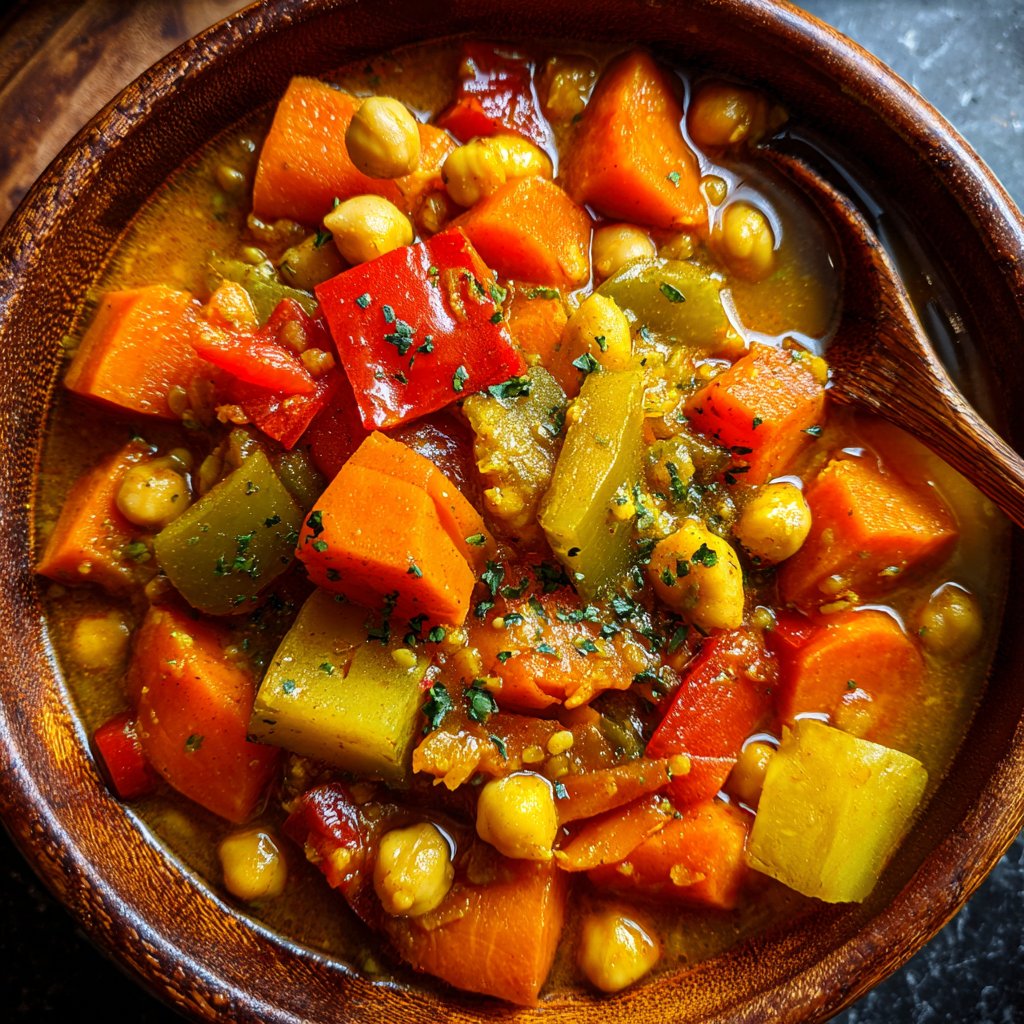
Instructions
Follow these simple steps to prepare your curry:
Prepare Vegetables
Start by prepping all your vegetables as mentioned in the ingredients list. This will ensure they cook evenly and blend nicely into the curry.
Combine Ingredients
In your crockpot, add all the prepared vegetables, diced tomatoes, chickpeas, and spices. Pour in the vegetable broth and stir to combine.
Cook
Set your crockpot on low and let it cook for about 4 hours. If you’re in a rush, you can also set it on high for about 2 hours.
Finishing Touch
Once the cooking time is up, taste and adjust the seasoning with salt and pepper. Stir in the fresh cilantro just before serving.
Serve and Enjoy
Serve the curry over cooked rice or quinoa, and enjoy the delightful blend of flavors!
Enjoy your healthy meal, filled with flavor and goodness!
Pro Tips
- For added protein, consider tossing in some diced tofu or tempeh during cooking. You can also experiment with seasonal vegetables for varied flavors throughout the year.
Ingredient Substitutions
This recipe is wonderfully flexible when it comes to ingredients. If you're looking for a low-carb alternative, you can replace potatoes with diced cauliflower or turnips, which blend well with the curry's spices. Additionally, feel free to experiment with various beans, such as kidney beans or black beans, if chickpeas aren’t available – just adjust the cooking time accordingly, as they may need a bit longer to soften in the dish.
For those following a gluten-free diet, rest assured that all the ingredients in this curry are naturally gluten-free. Always check labels, especially for store-bought vegetable broth, to avoid any hidden gluten sources. The spices used here also contribute to the flavor without compromising dietary needs.
Common Troubleshooting
A common issue when making curries in a crockpot is a watery texture. If you encounter this, try removing the lid for the last hour of cooking to allow excess liquid to evaporate. Alternatively, you can thicken the curry with a cornstarch slurry – mix equal parts cornstarch and cold water, stirring it into the simmering curry until it reaches your desired consistency.
Another challenge can be ensuring the vegetables are perfectly cooked. If you notice that some vegetables seem overcooked or mushy while others are tough, it may be due to size inconsistency. Always cut vegetables into similar sizes and consider adding the more delicate ones like broccoli halfway through the cooking process to maintain their texture.
Creative Variations
While the classic vegetable curry is delicious on its own, you can easily customize it. Coconut milk can be added towards the end of cooking for a richer and creamier texture, turning the curry into a delightful coconut curry variation. Just be mindful to adjust spices to balance the sweetness of the coconut milk.
Another variation involves adding protein, such as cubed tofu or tempeh, which can make the dish more filling. Simply toss the protein in with the vegetables to cook, or pan-sear them separately before adding them to the crockpot to enhance their flavor. Consider swapping out the curry powder for garam masala for a unique twist on the spice profile.
Questions About Recipes
→ Can I use frozen vegetables?
Yes, frozen vegetables work well; just adjust the cooking time as they may require less time to heat through.
→ Is it possible to make this curry vegan?
Absolutely! This recipe is naturally vegan as long as you use vegetable broth.
→ Can I prepare this in advance?
Yes, you can prep all the ingredients a day in advance and store them in the fridge until you are ready to cook.
→ What can I serve it with?
This curry pairs beautifully with rice, quinoa, or even naan bread for a complete meal.
Healthy Crockpot Vegetable Curry
Created by: Ivy Richardson
Recipe Type: Healthy Kitchen Moments
Skill Level: Beginner
Final Quantity: 4 servings
What You'll Need
Vegetables and Base
- 2 cups chopped carrots
- 1 cup diced potatoes
- 1 cup chopped bell peppers
- 1 cup broccoli florets
- 1 can (14 oz) diced tomatoes
- 1 can (15 oz) chickpeas, rinsed and drained
- 1 onion, chopped
- 3 cloves garlic, minced
Spices and Broth
- 2 tablespoons curry powder
- 1 teaspoon cumin
- 1 teaspoon turmeric
- 1/2 teaspoon chili flakes (optional)
- 2 cups vegetable broth
- Salt and pepper to taste
For Serving
- Fresh cilantro, chopped
- Cooked rice or quinoa
How-To Steps
Start by prepping all your vegetables as mentioned in the ingredients list. This will ensure they cook evenly and blend nicely into the curry.
In your crockpot, add all the prepared vegetables, diced tomatoes, chickpeas, and spices. Pour in the vegetable broth and stir to combine.
Set your crockpot on low and let it cook for about 4 hours. If you’re in a rush, you can also set it on high for about 2 hours.
Once the cooking time is up, taste and adjust the seasoning with salt and pepper. Stir in the fresh cilantro just before serving.
Serve the curry over cooked rice or quinoa, and enjoy the delightful blend of flavors!
Extra Tips
- For added protein, consider tossing in some diced tofu or tempeh during cooking. You can also experiment with seasonal vegetables for varied flavors throughout the year.
Nutritional Breakdown (Per Serving)
- Calories: 250 kcal
- Total Fat: 4g
- Saturated Fat: 1g
- Cholesterol: 0mg
- Sodium: 300mg
- Total Carbohydrates: 43g
- Dietary Fiber: 12g
- Sugars: 6g
- Protein: 10g